
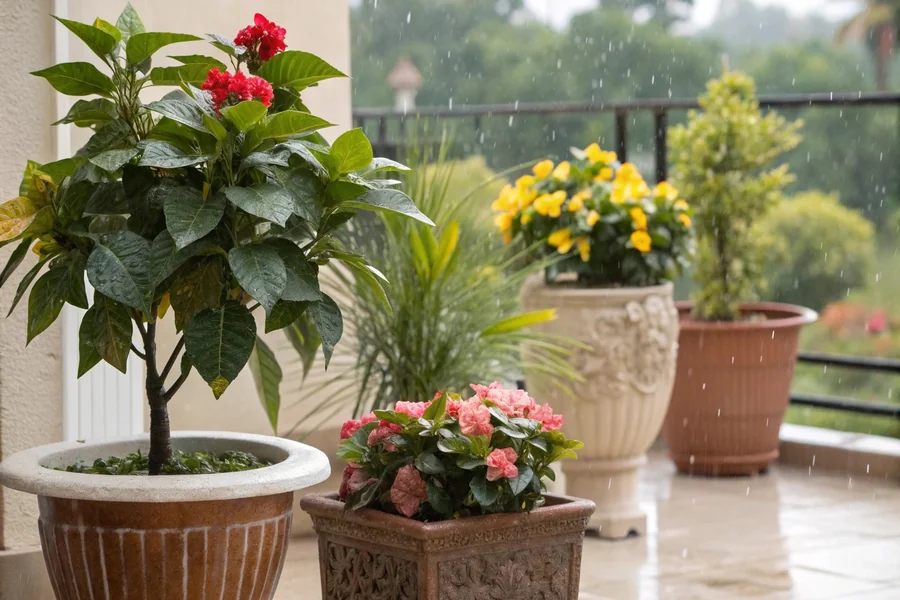
After three failed attempts at decorating my covered patio with “outdoor-rated” artificial plants that faded, cracked, or deteriorated within months, I became obsessed with understanding why so many products failed to deliver on their promises. My journey into the world of outdoor artificial plants revealed surprising insights about quality differences and why most options simply don’t work.
The Outdoor Challenge Nobody Talks About
UV radiation destroys most artificial plant materials faster than manufacturers admit. Even under covered patios with indirect sunlight, UV exposure degrades colors and weakens materials. Add rain, temperature swings, humidity, and occasional dust storms, and you understand why outdoor artificial plants face exponentially harsher conditions than indoor counterparts.
Most artificial plants are designed for indoor use, then marketed as “outdoor safe” with minimal additional treatment. This explains the disappointing performance. True outdoor durability requires engineering products specifically for environmental exposure from the ground up, not simply applying surface coatings to indoor products.
What Real Weather Resistance Requires
After consulting with materials scientists and experienced landscape designers, I learned that genuine outdoor-rated artificial plants need UV-stabilized materials throughout their construction, not just surface treatments. Colors must be integrated into materials rather than applied afterward. Assembly methods must account for expansion and contraction from temperature changes.
Weather-resistant artificial plants also require drainage considerations. Water pooling in leaf structures or base containers promotes mold and degrades materials faster. Quality outdoor plants incorporate design elements that allow water to drain properly while maintaining realistic appearance.
Size Matters for Outdoor Applications
Smaller outdoor artificial plants often work reasonably well because their compact size limits environmental exposure. Large specimens—the statement pieces that transform patios and entryways—present far greater challenges. More surface area means more UV exposure. Greater height means more wind stress. Larger containers require heavier bases for stability.
This is why finding convincing large artificial plants suitable for outdoor use proves so difficult. Most manufacturers lack the expertise to engineer products that maintain realism while withstanding environmental punishment at scale.
My Search for Real Solutions
Determined to find outdoor artificial plants that actually worked, I researched specialized manufacturers focusing specifically on weather-resistant specimens. Generic home decor brands consistently disappointed. Commercial outdoor artificial plant suppliers offered better durability but often sacrificed realistic appearance for functionality.
I eventually discovered brands specializing in premium outdoor artificial plants that didn’t compromise on either realism or durability. These specialists use proprietary materials and construction techniques developed specifically for outdoor applications. The difference was immediately apparent—colors that remained vibrant after months of sun exposure, materials that stayed flexible through temperature swings, and overall appearance that maintained botanical accuracy despite environmental challenges.
Indoor-Outdoor Versatility
What impressed me most was finding products genuinely suitable for both indoor and outdoor placement. This versatility matters for seasonal decorating or spaces that straddle indoor-outdoor boundaries. Many artificial plants work for one environment or the other, but rarely both effectively.
Premium manufacturers achieve this versatility through advanced materials that look realistic indoors while offering outdoor durability. This eliminates compromises and allows confident placement wherever greenery is desired, regardless of environmental conditions.
Testing Real-World Performance
I’ve now had premium outdoor artificial plants on my patio for over two years with zero degradation. Colors remain vibrant. Materials maintain their flexibility and realistic texture. This stands in stark contrast to previous purchases that showed obvious fading and deterioration within months.
The peace of mind from knowing plants will maintain their appearance season after season justifies the higher investment. No more replacing failed plants annually or accepting progressively worse appearance as products deteriorate.
Learning from Mistakes
My expensive lessons taught me that outdoor artificial plants represent cases where budget options simply don’t work. The environmental stresses are too severe, the quality requirements too demanding. Attempting to save money by choosing cheaper alternatives leads to repeated purchases that ultimately cost more while delivering inferior results. shayari
Recommendations for Others
For anyone considering outdoor artificial plants, especially large specimens, I strongly recommend researching brands with proven track records in weather-resistant construction. Read reviews from customers who’ve had products in place for years, not months. Verify that UV resistance is engineered throughout products, not just surface treatments.
The outdoor artificial plant market includes many disappointing options but also some genuinely excellent products from manufacturers who’ve mastered this specialized application. The key is identifying brands with real expertise rather than general manufacturers making outdoor claims they can’t support.


