Shaft vs Hollow Shaft Encoders: Practical Comparison for Automation Engineers
Hero Section (Bullet Summary)
A clear, hands-on breakdown of the mechanical and performance differences between solid-shaft and hollow-shaft encoders
Practical guidance on when to choose hollow shaft vs solid shaft, based on space constraints, vibration levels, and application type
Real installation factors that actually matter in the field — couplings, torque arms, brackets, and alignment effort
Straightforward pros and cons for each encoder type, without datasheet fluff
Includes a side-by-side comparison table and a step-by-step selection checklist you can use on real projects
What Are Shaft Encoders and Why Shaft Type Matters
At their core, shaft baumer encoder are devices that convert mechanical rotation into electrical signals — allowing automation systems to track position, speed, or direction. They’re essential components in motion control, used everywhere from servo motors and conveyors to CNC machines and robotic arms.
But not all shaft encoders are the same — and one of the biggest distinctions comes down to the shaft interface. Whether an encoder uses a solid shaft or a hollow shaft significantly impacts how it mounts, how it aligns with the motor or gearbox, and how it performs in real-world industrial environments.
Solid shafts usually require flexible couplings and precise alignment, while hollow shafts slide directly over the drive shaft — offering faster install and better use of space. Choosing the right shaft type can improve system reliability, simplify service, and prevent signal or mechanical issues down the line.
Let’s explore the key differences — and when to use each type — based on real experience in the field.
What Is a Solid Shaft Encoder?
A solid shaft encoder connects to the motor or machine shaft using a flexible coupling and is typically mounted with a flange or foot bracket. The encoder has its own shaft, and the coupling’s job is to transmit rotation while absorbing small misalignments. This setup takes a bit more time to install, but it gives you very controlled mechanics when done right.
I usually reach for a solid shaft encoder in high‑vibration or mechanically demanding environments. Because the encoder body is rigidly mounted and isolated from the motor shaft by a coupling, it handles shock loads and vibration better over the long term. This is especially important on heavy equipment, presses, or machines where alignment can drift slightly during operation.
A real example from the field: I once retrofitted a stamping press where the existing feedback device kept failing due to vibration. Switching to a solid shaft encoder with a proper flexible coupling solved the problem. The encoder stayed stable, signal noise disappeared, and maintenance calls dropped off completely. In setups like that, the extra effort during installation pays for itself fast.
When sourcing reliable solid shaft options, I’ve worked with suppliers like eltra trade, especially for applications where mechanical robustness and long service life matter more than quick installation.
What Is a Hollow-Shaft Encoder?
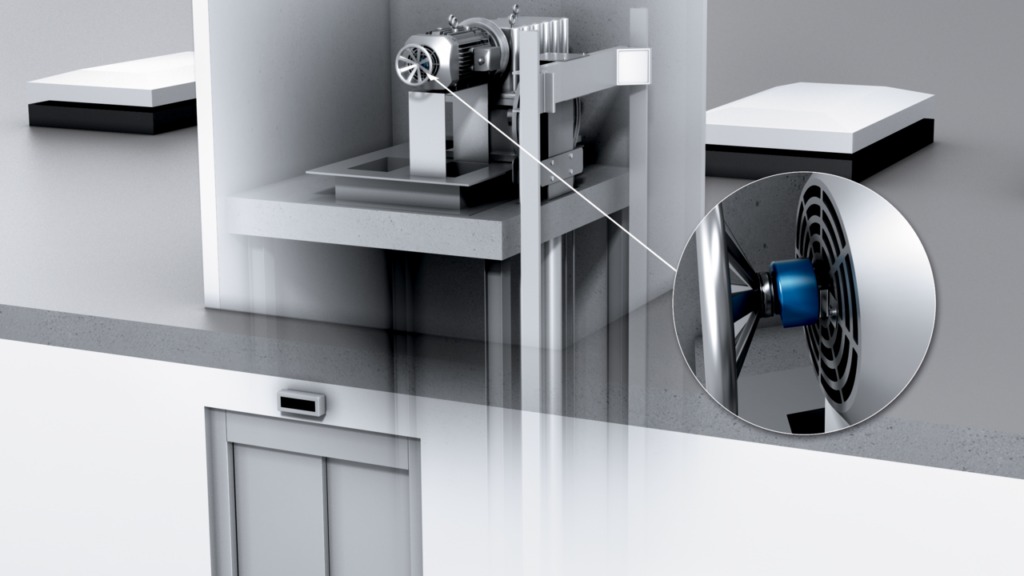
A hollow-shaft encoder is designed to slide directly over a motor or gearbox shaft, either fully (through-hole) or partially (blind-hole). Unlike solid shaft encoders that require a flexible coupling and bracket, hollow-shaft models attach via a clamping ring and are held in place with a torque arm or anti-rotation pin. This design not only reduces the number of mounting components but also makes alignment faster.
One of the main advantages I’ve experienced in the field is how much easier and quicker hollow-shaft encoders are to install, especially when you’re working in tight cabinets or retrofitting older machines. You can skip the hassle of shaft couplings entirely — just slide it on, secure it, and wire it up.
These encoders are especially common in servo motor feedback systems, compact automation setups, and OEM integrations, where space is limited and time is critical. I often use hollow-shaft encoders when doing upgrades or system swaps, as they save hours on alignment and offer great performance in low to moderate vibration environments. They’re a go-to for motion control teams looking for a clean, efficient install.
Shaft vs Hollow Shaft Encoders: Feature Comparison Table
When selecting an encoder for your automation system, understanding the mechanical and practical differences between solid shaft and hollow shaft designs is essential. While both types perform the same core function — converting rotary motion into electrical signals — their form factors, mounting methods, and installation demands differ in ways that can affect reliability, space efficiency, and maintenance effort.
The comparison table below highlights the key differences in areas like mounting complexity, alignment requirements, space constraints, and cost. This breakdown is especially useful when you’re choosing between a new OEM design and a retrofit upgrade, or trying to decide whether installation speed or mechanical rigidity is more critical for your application.
| Feature | Solid Shaft Encoder | Hollow Shaft Encoder |
| Mounting Style | Requires coupling + flange or bracket | Slides directly onto shaft, secured with clamping ring |
| Alignment Difficulty | Higher — requires precise coupling alignment | Lower — self-centers on motor shaft |
| Space Required | Needs more clearance for couplings and brackets | Compact — minimal space around shaft |
| Shock/Vibration Resistance | Better — decoupled from shaft via coupling | Moderate — relies on torque arm and clamping fit |
| Installation Speed | Slower — more components and alignment steps | Faster — quick slide-on and secure |
| Typical Cost | Often lower hardware cost, but more labor | Slightly higher hardware cost, lower install effort |
In my experience, solid shaft encoders are the go-to in high-vibration environments or when precise coupling isolation is needed. Meanwhile, hollow shaft encoders shine in tight spaces, retrofit scenarios, or when quick installation and alignment are top priorities.
Use this table as a quick reference when you’re spec’ing out feedback devices for a motion control system — especially when space, speed, and vibration are critical constraints.
When to Use a Hollow-Shaft Encoder (Pros & Cons)
Hollow-shaft encoders offer a streamlined solution for many motion control setups — especially when space is tight, retrofit speed matters, or rear-shaft access on servo motors is available. They mount directly onto the motor or gearbox shaft, eliminating the need for couplings and simplifying alignment. I tend to reach for hollow-shaft designs in tight control cabinets or when I’m retrofitting older machines with limited access to the motor face.
That said, there are trade-offs. While they make installation faster and reduce mechanical complexity, they’re slightly more sensitive to vibration and require a secure torque arm to prevent rotation slippage.
Here’s a quick breakdown of their strengths and limitations:
Pros:
- Fast and simple to install — no couplings required
- Compact — ideal for confined or embedded systems
- Excellent for servo motor feedback loops, especially on the rear shaft
- Great for OEM designs and field retrofits where time and space are limited
Cons:
- Less robust in high-shock or vibration environments
- Requires proper torque arm support or anti-rotation bracket
- May have fewer mounting options compared to solid-shaft encoders
In short: If your priority is ease of installation, space efficiency, or fast turnaround, a hollow-shaft encoder is often the smarter choice — just make sure your torque arm is solid and that vibration isn’t a major concern.
When to Use a Solid-Shaft Encoder (Pros & Cons)
Solid-shaft encoders are the go-to choice when mechanical stability and long-term reliability matter more than installation speed. Because the encoder shaft is connected to the motor or machine shaft via a flexible coupling, you get better isolation from vibration, axial loads, and minor shaft misalignment. This makes solid-shaft designs a strong fit for heavy-duty machinery and harsh industrial environments.
In my experience, I typically specify solid-shaft encoders on presses, large conveyors, or outdoor equipment — anywhere vibration, shock, or continuous operation could stress a direct-mounted encoder.
That added robustness does come at a cost: installation takes longer, and alignment needs to be done carefully to avoid premature bearing wear.
Pros:
- Mechanically rigid with good isolation from vibration and shock
- Performs reliably in harsh or high-load environments
- Wide range of flange and mounting options for industrial machines
- Better suited for applications with axial or radial shaft movement
Cons:
- Slower installation due to coupling and bracket setup
- Requires precise shaft alignment to avoid mechanical stress
- Takes up more space compared to hollow-shaft designs
Bottom line: If your application involves high vibration, heavy machinery, or demanding operating conditions, a solid-shaft encoder is usually worth the extra installation effort.
How to Choose Between Hollow-Shaft and Solid-Shaft Encoders
Choosing between hollow-shaft and solid-shaft encoders isn’t just a mechanical decision — it affects how fast you can install the encoder, how much space you need, and how well it will handle your environment. Here’s a step-by-step checklist I follow in real-world automation projects to pick the right shaft style:
Step-by-Step Selection Guide:
- Check available space around motor/gearbox
- If space is tight or the encoder needs to be mounted directly on a rear shaft, go with a hollow-shaft encoder.
- For open installations where brackets and couplings are manageable, solid-shaft works fine.
- Assess vibration and shock levels
- High-vibration or heavy industrial environments typically favor solid-shaft encoders with couplings that isolate the encoder from motor shock.
- Evaluate install time and serviceability
- Need a quick install or fast swap-out? Hollow-shaft wins. It reduces alignment steps and is often easier for field technicians.
- Match encoder shaft to motor shaft
- Always check shaft diameter and type: some motors are better suited to through-shaft or blind-hollow encoders, while others require precise coupling to a solid shaft.
- Consider OEM vs retrofit project
- In retrofits where existing motor setup limits space or bracket options, hollow-shaft encoders are usually easier to integrate.
- For OEM builds with predefined layouts and access to all sides, solid-shaft can offer greater long-term stability.
- Review bracket, torque arm, or coupling requirements
- Hollow-shaft units often need a torque arm to prevent rotation, while solid-shaft encoders require precision coupling — both add cost and mounting constraints, so factor that into your design early.
Final Advice from the Field
After years of setting up motion control systems in everything from packaging lines to CNC retrofits, I’ve learned that the shaft type you choose can make or break an install — literally. Before I spec any encoder, I always double-check the motor shaft diameter, available mounting space, and whether I’ll need a coupling or torque arm. It only takes a few extra minutes, but it can save hours of frustration during commissioning.
I’ve seen a few horror stories too. In one job, a solid-shaft encoder was forced onto a hollow-shaft mount with a makeshift bracket. It worked for a week, then failed mid-shift due to vibration stress — taking a full production line offline. That kind of downtime is avoidable with the right selection from the start.
That’s why I always keep both solid-shaft and hollow-shaft encoders in my field kit, along with the proper couplings, brackets, and torque arms. You never know when a job will throw you a curveball, and having both options on hand means I can respond fast without sacrificing reliability.